
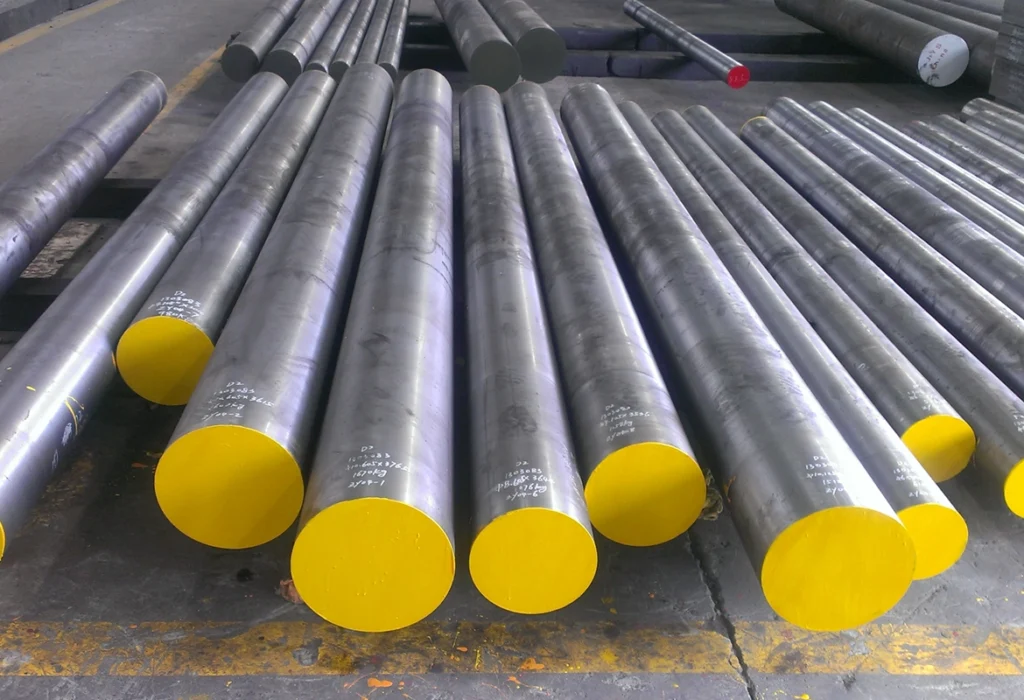
A client once asked me why their gear shafts kept failing, despite using 4140 alloy steel. The answer? They’d skipped the quench-and-temper process to save time. That’s the thing about alloy steel characteristics: The grade is just the starting point. How you treat it determines whether it’s an asset or a liability. At GP Steel Supply, we don’t just list alloys—we show you how to unlock their potential (or spot when you’re overpaying).
Take 4340 vs. 4140. Both are versatile, but 4340’s higher nickel content boosts toughness—critical for aircraft landing gear. Yet I’ve seen manufacturers specify 4340 for hydraulic cylinders, where 4140 would suffice. That’s a 20% cost premium for no gain. Our platform includes a “Performance vs. Cost” matrix for common alloys, so you can see where you’re buying extra properties you’ll never use.
Heat treatment is where most projects go wrong. An alloy like 8620 is useless without carburizing; 4130 loses its advantage if not normalized. We provide heat-treatment “recipes” for each grade, with temperature ranges and cooling rates. Pro tip: If your shop can’t handle vacuum hardening, don’t specify a grade that requires it—no matter how good the data sheet looks.
Corrosion-resistant alloys are another minefield. Many assume 17-4PH stainless is the gold standard, but in chloride-heavy environments, 2205 duplex often lasts 3x longer at the same cost. Our corrosion comparison tool lets you input your environment (pH, temperature, contaminants) and see how alloys stack up. I’ve used it to help chemical plants cut maintenance costs by 40% just by switching grades.
Here’s my rule for alloys: Start with the failure mode you’re trying to prevent. Need fatigue resistance? Prioritize cleanliness (low inclusions). Fighting wear? Look at carbide distribution. Our “Alloy Selector” tool filters grades by these exact criteria—because the right steel isn’t the most expensive one; it’s the one that solves your specific problem.