
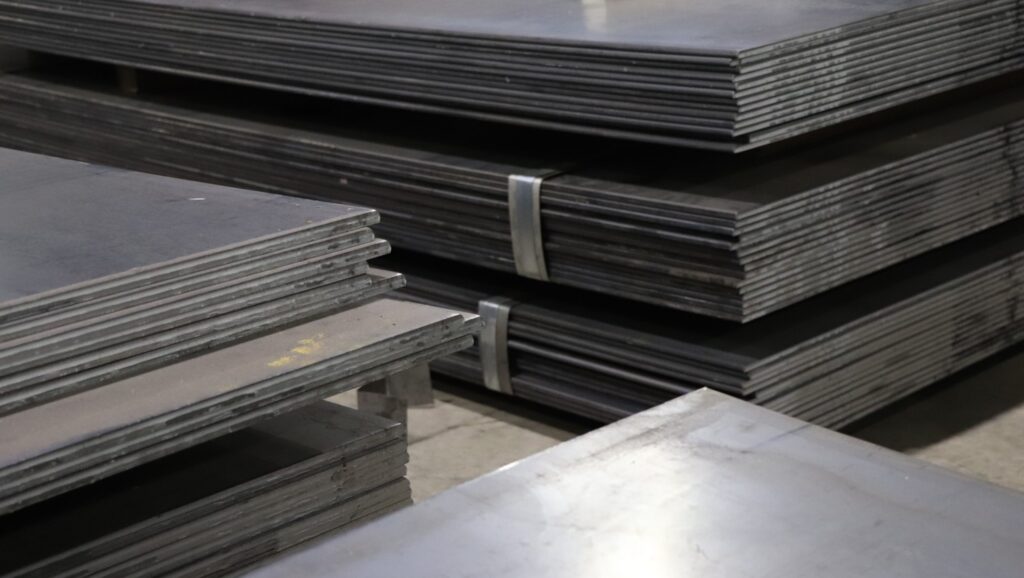
I’ll never forget the shipbuilder who ordered 1-inch steel plate for a barge hull, only to watch it buckle during welding. The issue? They’d focused solely on thickness, ignoring the plate’s carbon equivalent (CE) value. High CE means higher hardness—but also higher risk of cracking under heat. That’s why our steel plate overview tools include CE calculators alongside thickness charts. Because in metallurgy, the numbers you don’t check can sink your project.
Let’s break down what really matters. For abrasion resistance (think mining equipment), look at Brinell hardness—not just grade. A 400 BHN plate can outlast a 500 BHN one if the latter’s microstructure is inconsistent. We test and publish hardness maps for common grades, so you’re not gambling on supplier claims. And if you’re working in cold climates? Toughness (via Charpy tests) trumps hardness every time. I’ve seen Arctic-grade plates specified for Texas projects—overkill that inflates costs by 30%.
Here’s a secret: Plate flatness is often more critical than thickness. A “flat” plate with a 1/8-inch camber can throw off laser cutting tolerances, wasting hours in fabrication. Our platform flags flatness standards (like ASTM A6’s Table 2) and shows how mills achieve them—because “mill flat” and “precision leveled” aren’t the same thing. I always tell clients: If your project involves CNC machining, pay for the flatness cert.
Finally, don’t overlook the fabrication material guide for your chosen plate. Some grades, like A514, require preheat during welding; others, like A572, are more forgiving. We link every plate grade to its corresponding welding procedures—because no one should learn about preheat requirements after the metal arrives.